
One of the most common questions our settlement agreement solicitors receive is: “What is a reasonable settlement agreement?” Employees want to know if the settlement agreement payment they’ve been offered is fair and how it compares to the average settlement agreement amount in the UK. This article will explain what affects your payout, how to negotiate a better deal and what you should consider before signing.
How Much Should I Get in a Settlement Agreement?
What is a reasonable settlement agreement? The amount you receive should fairly compensate you for losing your job. However, the settlement agreement payment varies based on your situation.
Several factors affect your payout, including:
- Your salary and contractual notice period
- How long you’ve worked for your employer
- Whether your employer has a fair reason to dismiss you
If your employer has a strong legal reason for dismissal, they may offer a lower payout. However, if your case is stronger, you may be able to negotiate a better deal. Understanding the average settlement agreement amount in the UK can help you decide whether the offer is fair.
Exceeding Two Years of Service
Employees who have worked for over two years have stronger legal protections against unfair dismissal. If an employer has no fair reason to dismiss an employee with over two years of service, they may need to offer a higher settlement agreement payment to encourage them to sign.
The amount offered can also depend on the reason for termination. For example:
- Performance-related dismissals can be time-consuming and complex for employers.
- If an employer wants to avoid the lengthy process of managing performance issues, they may increase the settlement payment to encourage a quicker resolution.
Changes to Dismissal Laws for Employees with Less Than Two Years of Service.
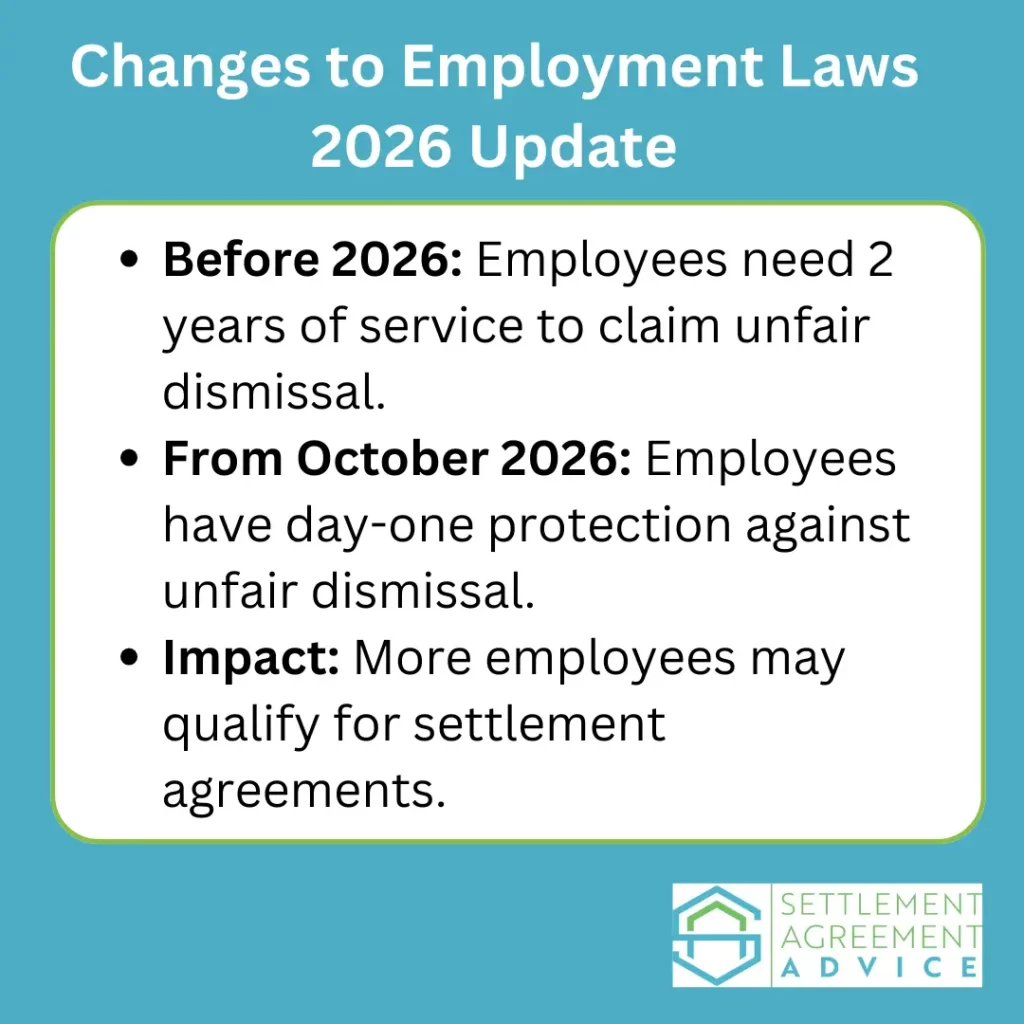
Currently, employees need two years of continuous service to claim unfair dismissal. This is unless the dismissal is for an automatically unfair reason, such as discrimination or whistleblowing.
However, upcoming changes under the Employment Rights Bill propose removing this two-year qualifying period. If this law takes effect in October 2026, all employees, regardless of length of service, would have day-one protection against unfair dismissal. This means employers would need a valid reason and follow a fair process before dismissing any employee. Until then, the current rules remain in place, with exceptions for automatically unfair dismissals.
Redundancy
Redundancy is often a faster way to end employment, which can lead to lower settlement payments. This is especially true for employees with short service, as they have fewer legal protections and may receive only the minimum redundancy pay required by law.
Get Expert Advice on Your Settlement Agreement
If you’ve been offered a settlement agreement, it’s important to know whether the payment is fair. Understanding the average settlement agreement amount in the UK and your legal rights can help you negotiate a better deal.
Our expert settlement agreement solicitors can:
- Review your offer to ensure it reflects your situation.
- Advise on your legal rights, including unfair dismissal and redundancy pay.
- Negotiate for a higher settlement payment where possible.
Don’t sign without expert advice! Contact us today for a free consultation and let us help you secure the best possible outcome. Call now or fill out our online form below.