

A confidentiality settlement agreement keeps both the details of a dispute and the terms of the agreement private. Employers often include a confidentiality clause in an employment contract to protect their business and reputation. Employees may also prefer confidentiality to avoid affecting future job opportunities.
But can an employer put a contractual confidentiality pay clause in a contract? In many cases, yes. These clauses prevent employees from sharing details about their settlement payment. Breaking these terms could lead to legal trouble.
Key Reasons for Confidentiality:
- Protects both parties from reputational harm.
- Prevents future disputes about the agreement’s terms.
- Safeguards business information and sensitive details.
- Helps employees move on without publicising their case.
Let’s delve deeper into employment contract confidentiality and how confidentiality clauses work. We will look at what happens after a breach of settlement agreements.
Get Legal Advice Before Signing
Before signing a confidentiality settlement agreement, it’s important to get advice from an employment lawyer. They can help you understand the confidentiality clause in your employment contract and what it means for you.
In some cases, you may have already breached confidentiality before signing. This could lead to a breach of settlement agreements, which might cause legal issues later. A lawyer can check if this applies to you and help you avoid problems.
Often, employment contract confidentiality rules apply only to employees. This isn’t always fair. A lawyer can negotiate to make sure the employer also agrees to keep the settlement terms private. This ensures confidentiality is mutual, protecting both sides.
If you’re unsure about any terms, always seek legal advice before signing.
Why Confidentiality Matters
Keeping a settlement agreement private is important because talking about it could affect your chances of getting a new job. Future employers may have concerns if they hear about disputes with past employers.
That’s why it’s also important to secure a positive reference as part of your confidentiality settlement agreement. This ensures your employer provides a fair reference when you apply for new roles. Always check that this is included before signing.
Are Settlement Agreements Confidential?
Yes, settlement agreements are confidential, but only once signed by all parties. Until then, they are considered “without prejudice,” meaning they are off the record and separate from formal legal proceedings. If you’re unsure about your agreement, it’s best to get legal advice.
Even after signing, most agreements include strict confidentiality clauses. These prevent both the employer and employee from discussing the dispute or the terms of the settlement with others. However, employees should make sure the confidentiality clause in the employment contract works both ways. This means the employer should also agree to keep the details private.
In addition to confidentiality settlement agreement clauses, many agreements include non-derogatory undertakings. These prevent both parties from making negative or damaging statements about each other, either in writing or verbally.
If you’re considering signing a settlement agreement, always check the confidentiality and non-derogatory clauses to ensure you’re fully protected.
Get Expert Legal Advice on Your Settlement Agreement
Confidentiality is a key part of any settlement agreement, and it’s important to ensure your rights are fully protected. Whether you need help reviewing a confidentiality clause in your employment contract, negotiating fair terms, or preventing a breach of settlement agreements, our expert solicitors can help.
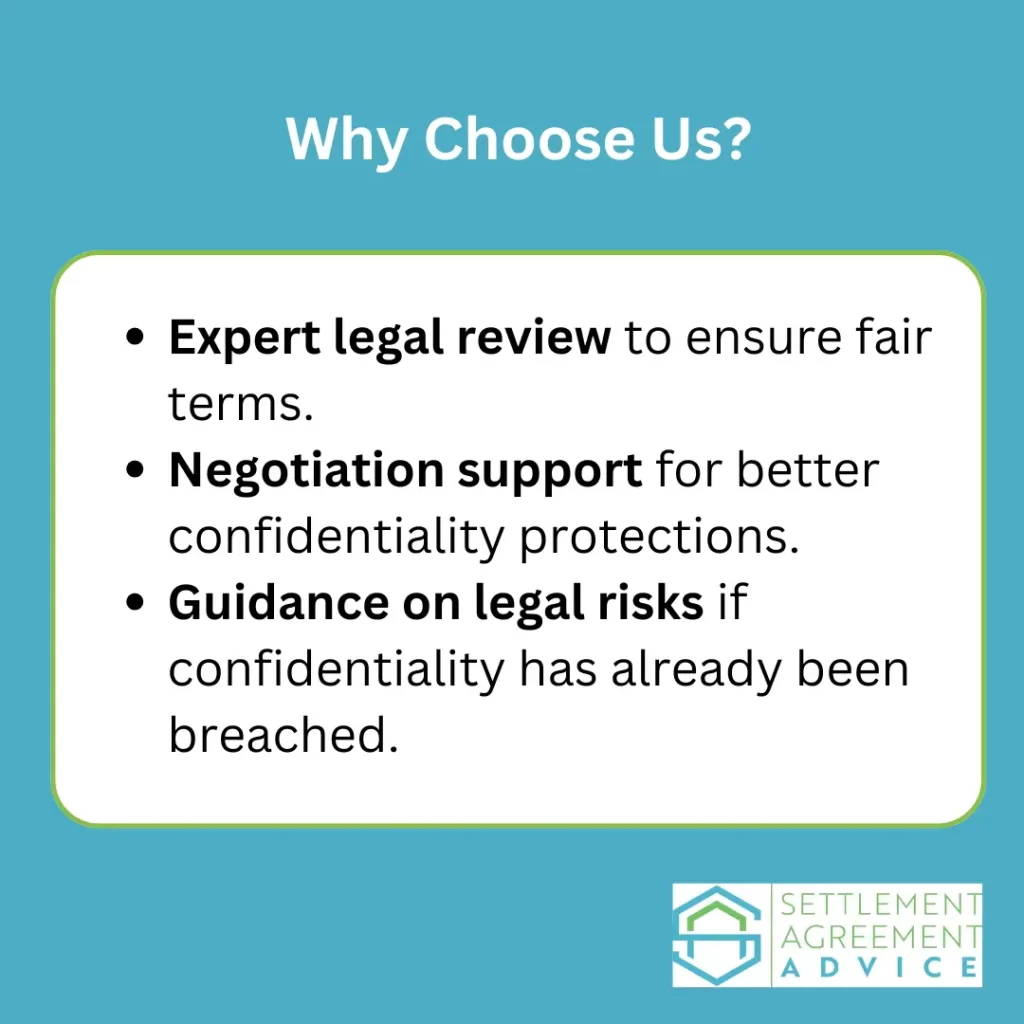
Contact us today for a free consultation with a specialist settlement agreement solicitor. We’ll review your agreement, explain your rights, and ensure you get the best possible outcome. Call now or complete the form below to get started.